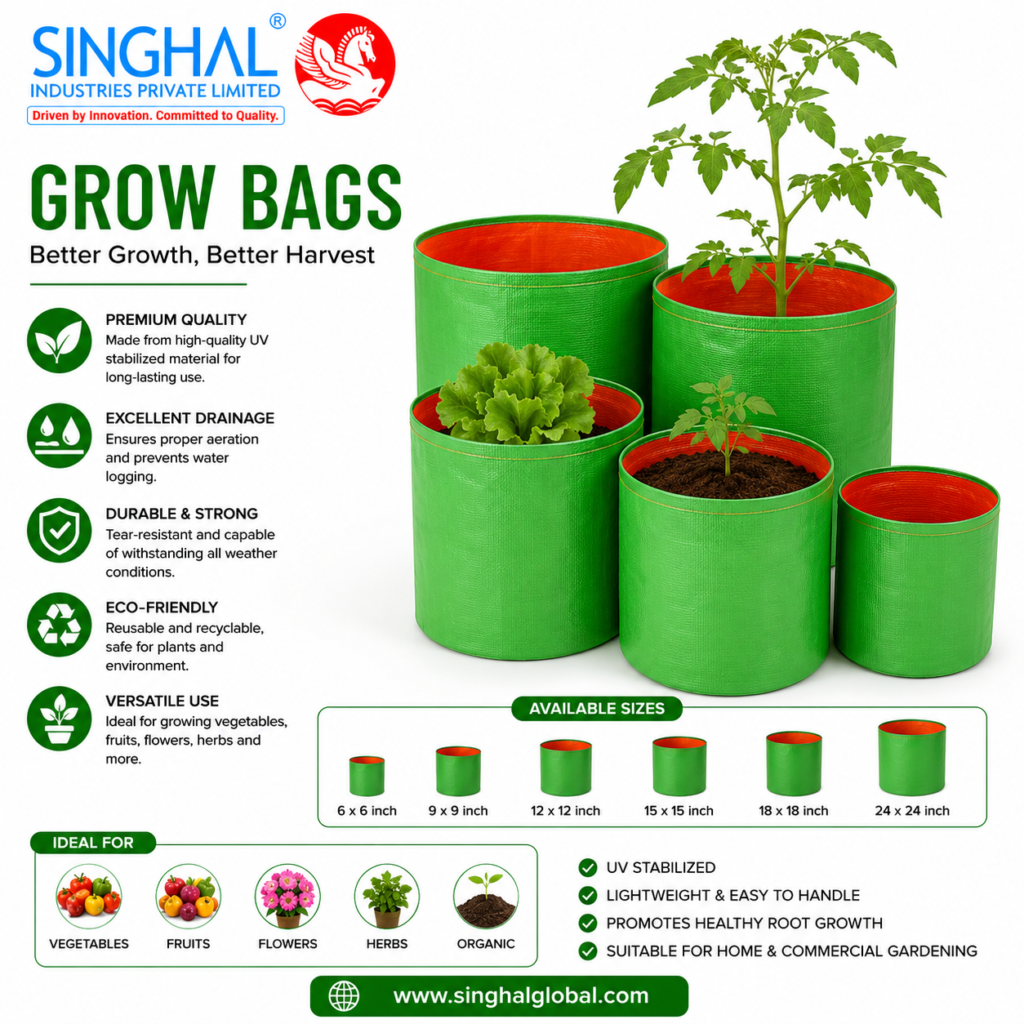
Grow bags are made for growing vegetables, herbs or flowers like seedlings and shrubs as well as some plants. They have applications in home gardens, balconies, terraces and rooftops, nurseries, greenhouses and commercial farms Grow bags, on the other hand, are light and easy to move and set up as opposed to heavy clay pots or even permanent beds. In addition, they simplify the process for growers to manage the soil mix, the watering and plant spacing. Singhal industries Private limited provides HDPE and LDPE grow bags for vegetables, fruit, herbs & flowers in round shape, rectangular shape & circular shape. This means they are available to all sorts of growing methods, spaces. However, a grow bag is more than just an inexpensive pot. Cultivation becomes more flexible, but the plant still requires sun, nutrition analog support and precise hydrating. The container helps organize growth.
Use in Home Gardens
Plant Grow Bags are mostly popular for home gardens and often bought by consumers who want to grow vegetables or flowers without requiring a large backyard. Herbs Chilies, tomatoes and spinach or flowers in compact containers can fit on a balcony. A terrace can hold row after row of bags, a tiny courtyard the bags. Growers can reposition the bags as sunlight shifts or shelter tender plants from extreme weather. It allows for easier replacement of soil than in a permanent bed. But filled bags can get heavy, especially after watering. Before placing many large containers, balcony and rooftop gardeners must think about surface strength, drainage, wind, and water runoff. Definitely you can easily move a small bag, but to shift the large wet bag may be marginally difficult if the spot is unsafe. Yet, its a simple point which people tend to remember only after they have filled everything.
Nursery and Greenhouse Applications
Containers must be standardized, uniform, durable durable and offered in multiple sizes. Grow bags are frequently used to plant seedlings, saplings, ornamentals, flowering plants, fruiting plants and vegetable plants until they are ready for sale or transplantation. The flexible structure is easier to handle and transport, With various sizes allows nurseries to match the container according to root development. All these bags can be placed in rows and drippers connected for periodic watering for greenhouse growers. The grow and nursery bags manufactured by Singhal Industries are defined as a horticulture cultivation bags product offering that provides an effective growing system for plant cultivation, ensuring ideal growth conditions. Units such as: Bags with handles, bags that can be printed on with identification marks, UV protection, what other nanomaterial you want Bagger to protect from your seams! The right one also depends on the cycle of your crops and exposure to open air. A product that is intended to be used for a short seedling period may not work well on an enormous plant that has been kept outside for years.
Commercial Farming Benefits
Grow bags are often used by commercial farmers in areas with poor soil quality, limited land and where controlled cultivation is preferred. They are New Age germination technology in protected agriculture, rooftop farming, hydroponic & soilless systems, Greenhouse-based and high-value vegetable production. Growers can make a standard medium per crop, prepare the bags in such a way that it is easy for irrigation, fertilizations, pest inspection and harvesting. It also facilitates crop rotation since bags can be moved, emptied, washed and reused. According to the Singhal Industries’ published company information, its grow bags are employed for residence gardening, balcony gardening, rooftop gardening and agriculture with products exported to over 80 countries. Still, commercial use requires planning. The bags must have consistent bag size, reliable drainage, strong seams and consistency in repeat orders. There would be minor variations, though around a few millimeters but if we produce thousands of bags then it can create some havoc in the irrigation layout and plant spacing. As you scale, quality control matters even more not less.
Choosing Material and Size
These can be made from HDPE, LDPE, woven polypropylene, non-woven fabric, coir or other materials as well. When it comes to high-density polyethylene (HDPE), what they do is: make them strong, moisture-resistant, flexible and enduring outdoor parks. Fabric bags can also allow for better air circulation and drainage. Depending on plant type, climate, sun exposure, handling and expected service life. Size is equally important. Bags carting small bags are ideal for herbs, seedlings and small flowers. Hay bags, of course, fill with tomatoes, peppers and eggplants in medium-sized bags; beans and leafy vegetables. Bigger bags are preferred for potatoes, cucumbers, shrubs, strawberries and also small fruit trees. The only guiding principle that should be taken into account is not the size of a seedling. Consider its mature roots. But massive sometimes is not greater either. Oversized bags need more soil, hold more water and get heavier. Select ample space for roots to avoid packing dirt for reasons other than cost or weight.
Soil, Drainage, and Plant Health
Every good grow bag needs a good growing medium as well. Garden soil that has dense soil can get compacted and hinder roots, water movement, and air flow. A balanced medium can range from a combination consisting of soil, compost and cocopeat to sand–perlite or other materials based on the local conditions and crop demand. Keep drainage holes or breathable sides free, and place bags on surfaces from which excess water can drain. Avoid a rigid schedule of watering, and instead water based on moisture levels and current weather. While improved drainage might shield roots from waterlogging, they may also rankle wallets with bags that dry out more quickly in hot and windy locations. That sounds counterintuitive, but it is precisely why observation is so significant. Increase the nutrients slowly, and stake or trellis your tall growers. Check bags for torn seams, arthropod harm, salt development and blocked waste. Plant care is all biology, and although a container may be current.
How to find a best Grow bag
A buyer needs to check– Materials, GSM, Thickness, Size Capacity Shape Handles Stitching Drainage UV Treatment Colour Customization Minimum Order quantity and consistency in delivery all while choosing a Grow Bags Manufacturer Gujarat. Singhal Industries is a trader and supplier based in Gujarat, manufacturer of HDPE grow bags planter bags. A Grow Bags Exporter Gujarat must also know how to package, complete paperwork for exports, and deal with aspects like shipping protection, lead time and customer expectations. Samples should be requested by buyers and those samples should be tested in the same soil mix. Bag it, water it, lift it, sun it then check its seams and bottom. Commercial growers should always ask, whether or not the supplier is able to hold the same specs during repeat orders. Low price is no good as long, as the quality stays constant. Weak bags are not replaced in between cycles as this will not be due to any economic perspective.
Conclusion
If used and stored carefully they can have good longevity, so grow bags do provide some value for money. Do not slide full bags on rough floors, do not place them near anything sharp, remove the roots after each culture and wash and dry bags you want to reuse before storing. UV-protected products could resist better outdoor ages but all materials need being treated carefully. Items made from plastic and synthetic material are supposed to be disposed of using dedicated channels for recycling or waste management where applicable at the end of their life. To sum up, the grow bag is a versatile growing solution for home gardens, nurseries, greenhouses and commercial farms. They take less space, provide better control of the root zone environment, are easier for moving crops, and allow cultivation in areas too degraded for open soil. Selecting correct material, size and drainage with strength for the crop. Samples are tested before sowing, so that makes it easier if you stick to a good Grow bag manufacturer Gujrat or exporter and also plan irrigation. While grow bags can help with the modern-day cultivation, healthy plants still require conscientious care.
Frequently Asked Questions
Q1. Plants that can be grown in grow bags?
Depending on the size of the bags and the growing medium, vegetables, herbs, flowers, small seedlings, strawberries, shrubs (if you amend the soil) and dwarf fruit plants can be grown.
Q2. Grow bags are an exceptional choice even for commercial farming?
Yes. They are used for nurseries, greenhouses, protected agriculture, rooftop farms and soilless cultivation. Commercial users should choose uniform, durable bags with equal drainage and size.
Q3. Which grow bag size do I select?
Pick with consideration to the mature height, root system and feeding requirements of the plant or plants; how far on its own it can grow in a single season? Bags that are deeper and wider are needed for larger plants.
Q4. What should I ask a Grow Bags Manufacturer Gujarat?
Inquire about: Material, GSM, Thickness of the bag, Capacity of the bags, Drainage holes (yes or no), UV resistance, Stitching quality (2 line / 4 line), Handles Quality & reusability test and sample testing for ISO certificate, delivery as per requirement on time
Q5. Who is the largest Suppliers of Grow Bags?
No neutral, globally recognized public listing exists that shows which company is the largest supplier of grow-bag in the world. Singhal industries Private limited Leading Manufacturer And Supplier Of Gujarat Based HDPE grow bags, Planter bags For Horticultural Products. Buyers need to research and examine features such as the quality of raw materials; capacity to produce; coordination across various sizes; service provision for customization, reliable UV protection; drainage design, pricing strategies, export experience as well as proficiency in delivery before buying. aajjo