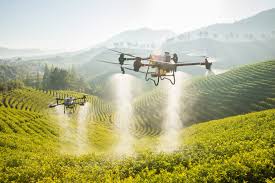
Farming is changing quickly because of modern technology. In the past, farmers relied mostly on manual labor, tractors, and simple spraying machines to protect crops and improve growth. Today, new tools are making farming faster, safer, and more efficient. One of the most important innovations in this field is drone spraying services.
Drone spraying services use advanced flying drones to spray fertilizers, pesticides, herbicides, and other agricultural liquids directly over crops. These drones are designed to work with precision, covering large fields in less time while using fewer resources. This technology is helping farmers improve productivity and reduce costs at the same time.
As global demand for food increases and farming challenges become more complex, drone spraying services are becoming an important solution in modern agriculture. They combine technology, automation, and data to support smarter farming practices.
This article explains drone spraying services in simple language, including how they work, where they are used, and what impact they may have in the future.
Understanding Drone Spraying Services and Their Core Technology
To understand how drone spraying services are changing agriculture, it is important to first understand the technology behind them and how they operate in farming environments.
What Are Drone Spraying Services?
Drone spraying services refer to the use of unmanned aerial vehicles to apply agricultural substances over crops. These services are usually provided by trained operators who control drones equipped with spraying systems.
These drones are used to:
- Spray pesticides to control pests
- Apply fertilizers to improve soil nutrition
- Distribute herbicides to remove weeds
- Deliver crop protection chemicals
Unlike traditional spraying methods, drones can target specific areas with high accuracy.
How Drone Spraying Drones Work
Drone spraying systems are designed with advanced components that allow them to fly and spray efficiently.
The basic process includes:
- Mapping the farmland using GPS technology
- Planning the flight path for the drone
- Filling the drone tank with liquid spray materials
- Flying over crops in a controlled pattern
- Releasing sprays through precision nozzles
This process ensures even distribution and reduces waste.
Key Technology Inside Drone Spraying Systems
Drone spraying services use several advanced technologies, including:
- GPS navigation systems for accurate positioning
- Sensors for detecting crop conditions
- Automated flight controls for stability
- Spray nozzles for controlled application
- Real-time data monitoring systems
These technologies work together to ensure precision and efficiency in farming operations.
Why Technology Matters in Modern Farming
Modern farming faces many challenges such as:
- Limited water resources
- Rising labor costs
- Pest resistance
- Climate change effects
Drone spraying technology helps farmers overcome these challenges by improving accuracy and reducing manual effort.
Growth of Drone Technology in Agriculture
Over the past few years, drone spraying services have grown rapidly because they:
- Save time
- Improve crop protection
- Reduce chemical waste
- Increase productivity
This growth shows how important technology has become in agriculture.
Uses, Benefits, and Future Impact of Drone Spraying Services in Agriculture
Drone spraying services are used in many areas of farming and offer several important benefits. They are also expected to play a major role in the future of agriculture.
Crop Protection and Pest Control
One of the main uses of drone spraying services is protecting crops from pests and diseases.
Drones help farmers:
- Identify pest-infested areas
- Apply pesticides quickly
- Prevent the spread of diseases
- Reduce crop damage
Because drones can act quickly, they help save crops before damage becomes severe.
Fertilizer Application
Fertilizers are important for healthy crop growth. Drone spraying services help distribute fertilizers more evenly.
This allows farmers to:
- Improve soil nutrition
- Increase crop growth speed
- Reduce fertilizer waste
- Target weak crop areas
This results in healthier and more productive fields.
Weed Management
Weeds compete with crops for water and nutrients. Drone spraying services help control weeds effectively.
Drones can:
- Detect weed-affected areas
- Apply herbicides only where needed
- Reduce chemical overuse
- Protect crop growth
This improves overall farm efficiency.
Large Farm Management
Managing large farms can be difficult using traditional methods. Drone spraying services make it easier.
They help farmers:
- Cover large areas quickly
- Maintain uniform spraying
- Monitor field conditions
- Reduce manual labor needs
This makes large-scale farming more manageable.
Precision Agriculture Support
Drone spraying services are an important part of precision agriculture, which uses data and technology for better farming decisions.
With drones, farmers can:
- Apply treatments only where needed
- Reduce unnecessary chemical use
- Improve crop health monitoring
- Increase farming efficiency
This leads to smarter and more sustainable agriculture.
Water and Resource Efficiency
Traditional spraying methods often use more water and chemicals than needed. Drone spraying services help reduce waste.
They improve efficiency by:
- Using precise spray amounts
- Targeting specific areas
- Reducing over-application
This helps conserve valuable resources.
Reduced Labor Requirements
Farming often requires a lot of manual labor, especially for spraying tasks.
Drone spraying services reduce this need by:
- Automating spraying processes
- Reducing workforce requirements
- Saving time and effort
This helps farmers manage costs better.
Improved Safety for Farmers
Traditional spraying methods expose workers to chemicals, which can be harmful.
Drone spraying improves safety by:
- Keeping humans away from chemicals
- Using remote-controlled systems
- Reducing physical exposure risks
This makes farming safer and healthier.
Faster Response to Crop Issues
When pests or diseases appear, quick action is necessary.
Drone spraying services allow farmers to:
- Respond quickly to crop threats
- Treat affected areas immediately
- Prevent further spread of damage
This helps protect harvests.
Environmental Benefits
Drone spraying services also support environmentally friendly farming.
They help reduce:
- Chemical overuse
- Soil contamination
- Water pollution
This supports sustainable agriculture practices.
Data Collection and Farm Monitoring
Many drone systems also collect useful data during spraying operations.
This includes:
- Crop health information
- Field condition reports
- Growth analysis
Farmers can use this data to improve decision-making.
Future Impact of Drone Spraying Services
The future of drone spraying services looks very promising as technology continues to improve.
In the future, we may see:
- Fully automated drone fleets
- AI-based crop analysis
- More precise spraying systems
- Longer battery life and flight time
- Integration with smart farming platforms
These improvements will make farming even more efficient and sustainable.
Challenges in Drone Spraying Adoption
Even though drone spraying services are highly useful, there are some challenges:
- Initial investment costs
- Need for trained operators
- Weather limitations
- Regulatory requirements
However, as technology becomes more affordable, these challenges are expected to reduce.
Why Farmers Are Adopting Drone Spraying Services
Farmers are increasingly choosing drone spraying services because they offer:
- Higher efficiency
- Better crop protection
- Lower operational costs
- Improved productivity
These benefits make drones a valuable tool for modern agriculture.
Conclusion
Drone spraying services are transforming agriculture by introducing advanced technology into everyday farming practices. They help farmers protect crops, apply fertilizers, control weeds, and manage large fields with greater precision and efficiency.